

When you just can’t say “no”
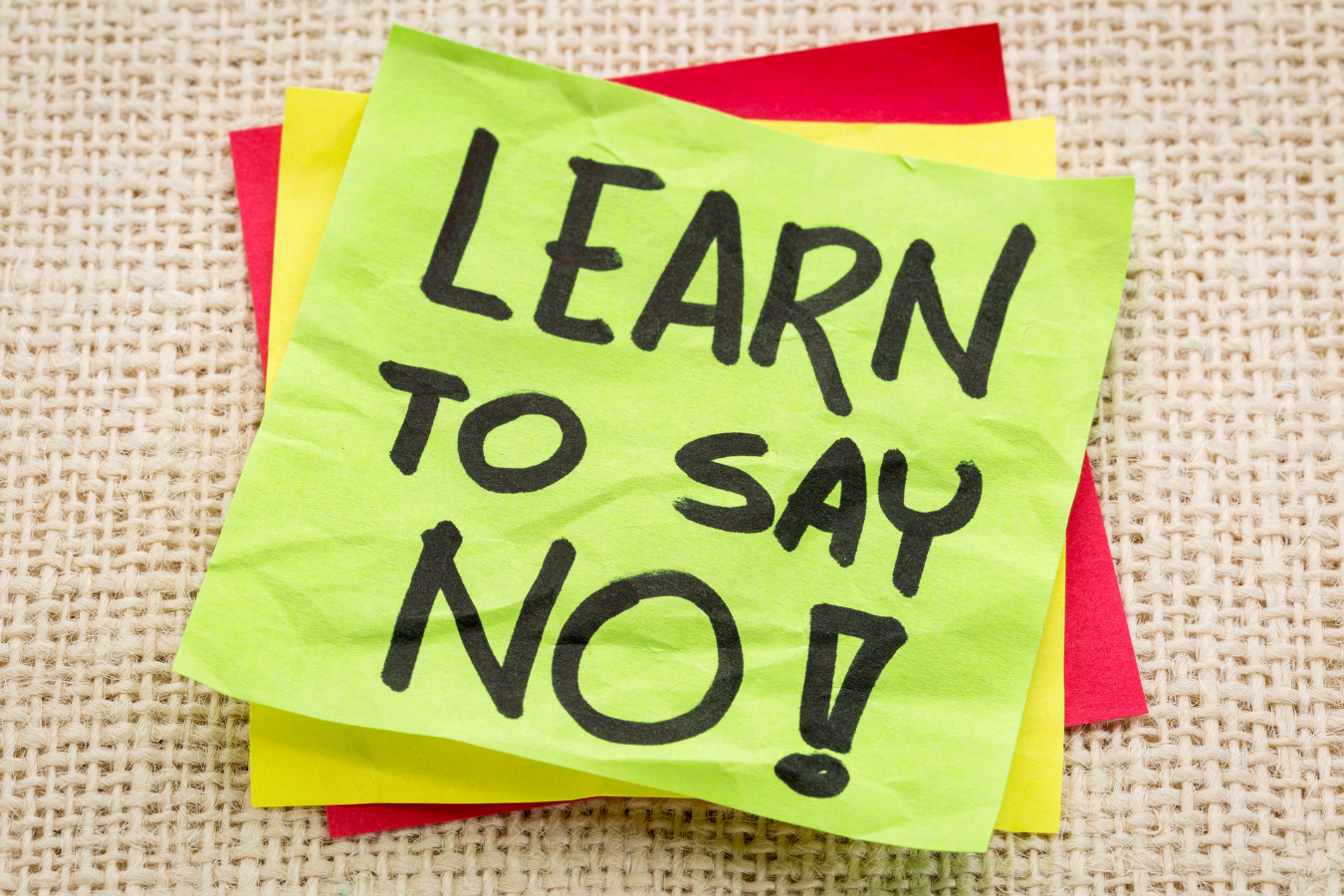
Many of us are overextended during regular circumstances. We can lose the capacity to keep up and feel like we are adequate. Yet, we continue to struggle to say “no.” Why is this?
A common reason why we don’t like to say “no” is that it might be perceived as being socially unacceptable or impolite. Humans are social beings. We crave a sense of belonging and connection. We want to be liked and respected by peers and especially those in positions of authority to preserve our standing or simply to maintain social pleasantries. Maintaining relationships at work and in the community is such an art form and necessity for survival that it makes sense to avoid unnecessarily ruffling feathers. So, if your biggest sticking point with saying “no” is to avoid being socially unacceptable or impolite, consider those implications.
If you say “yes” instead, it may lead to you feeling resentful, being overextended, and stressed, which may strain the relationship in another way. Also, the foundation of social relationships is trust, which requires honesty and openness. It may therefore achieve your goal of maintaining social relationships much better if you are able to clearly, simply, and honestly articulate the reason why you are saying “no” at this time.
It could be that you want to be perceived as a team player. You want people to count on you and value your input. This type of reputation is not built overnight. Consider that folks will remember all the times you said “yes” and contributed. If they are asking you to take on a task, you must have already earned their trust and respect. Being a team player also means that you may have to say “no” but that provides an opportunity for another teammate to shine. It feels good to help, so as long as you don’t abuse theprivilege of being a member of a team, your team members will enjoy being able to help. It can also be a real confidence builder for another team member when you suggest they take the lead on a project.
You may be concerned that saying “no” will be perceived as a sign of weakness, or you may hold this internal belief yourself. There are two parts here to dissect. First, you have absolutely no control over how others perceive you. They will think what they think, no matter what you do. Trying to anticipate what others will think and matching your behavior to it is a waste of time.
On the other hand, if the belief is internal, I would encourage you to consider that saying “no” is by no means a sign of weakness but can be considered quite the bold move depending on the circumstances. If you find yourself having this automatic thought, catch it and challenge it.
Some of us have learned to measure our self-worth through our actions. So, your worth is only as high as your last accomplishment. This is the most exhausting cycle of them all. I would encourage you to work hard on expanding your activities beyond your work, so you may find worth in doing things other than work. Also consider that different people value different things. You have value in your different roles, being a mother, son, sister, parent, friend, neighbor, mentor, teacher, etc.
Also consider taking on a role of giving back to others. You can share your talent without charging for it, or maybe you want to do something completely outside of your wheelhouse and just enjoy the simplicity of it, such as working in a community garden or helping in a soup kitchen. There is something unbelievably valuable about giving of yourself to others without expecting anything in return.
By Dr. Siquilla Liebetrau, Psy.D., HSPP
Vice President, Clinical Services
Bowen Health

Share this blog!