What does it take to support students beyond the classroom?
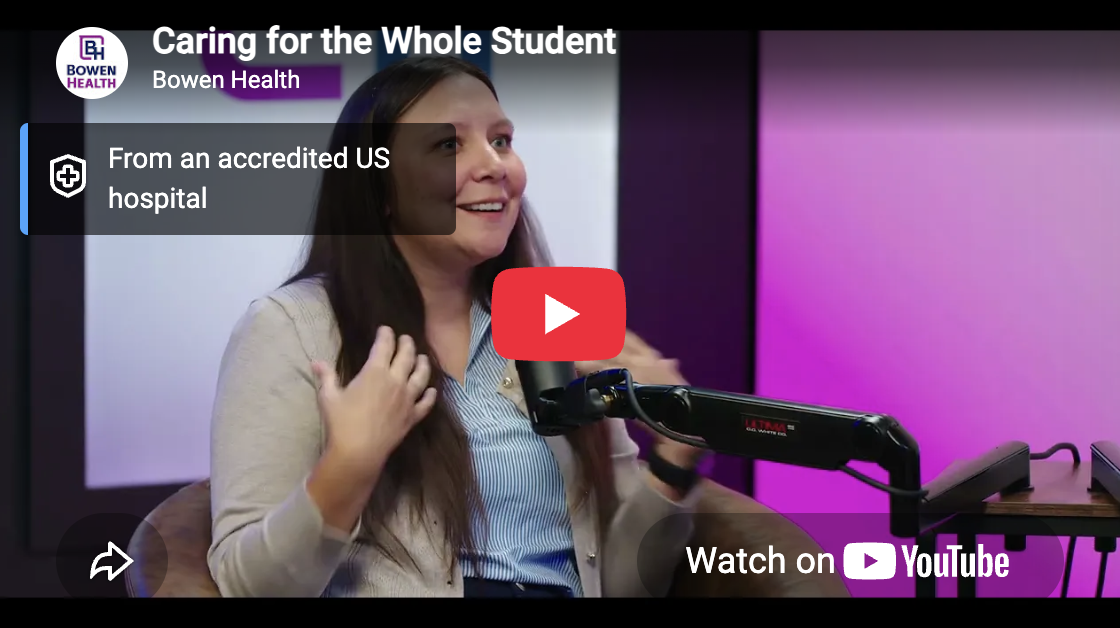
In this episode of the Bowen Health Podcast, Dr. David Hoffert, Superintendent of Warsaw Community Schools, joins Elena De La Cruz Fearnow, Practice Administrator at Bowen Health Warsaw, to discuss the growing connection between student success and access to mental health care.
From recognizing unmet needs in local schools to building stronger partnerships that support students and families, this conversation explores how communities can work together to remove barriers and create opportunities for young people to thrive.
Whether you're a parent, educator, community leader, or simply passionate about youth well-being, this episode offers valuable insight into the power of collaboration and whole-person care.
Watch the video on our YouTube channel, listen to the audio-only version on your preferred platform, or read the episode transcript below!
Vodcast
Audio
Transcript
-
0:06
Welcome to the Bowen Health Podcast.
0:07
I'm Tess Ottenweller, vice president of intensive services at Bowen Health.
0:12
Today, we're talking about something that impacts every family and every student, making sure children have access to the support they need to thrive.
0:21
We know that healthy students learn better, build stronger relationships, and are more likely to reach their full potential.
0:27
That's why I'm excited to discuss an innovative partnership between Warsaw Community Schools and Bowen Health that's helping connect families to services in a way that's convenient, accessible, and centered around the needs of children and parents.
0:41
Joining me today are Doctor David Hoffert, Superintendent of Warsaw Community Schools, and Elena Delacruz, practice administrator at Bowen Health.
0:50
Thank you for joining me, both of you today.
0:53
And before we jump into any discussion about partnerships or innovation, I'd really like our listeners to get to know the people behind the work.
1:01
So could each of you please introduce yourself, share your role, and tell us a little bit about maybe what you're most passionate about when it comes to serving children and youth?
1:10
Elena, I'm going to kick it over.
1:12
Yeah, absolutely.
1:13
I'm Alana Delacruz.
1:14
I'm the practice administrator of Warsaw at Bowen Health.
1:19
I've been at Bowen for 14 years and you know, I run the day-to-day operations of the office.
1:25
But one thing that really just keeps me coming in every day and really like fills my bucket is knowing that we're breaking a cycle, we're connecting somebody that needs help, we're that safe space for them and just really keeping that compassionate care in the forefront.
1:44
Love that.
1:45
All right.
1:45
And Doctor Hoffert.
1:45
Yeah.
1:46
Thank you so much for having me on here today.
1:48
My name is David Hoffert.
1:49
I'm a fourth generation Warsaw kid, so I'm a Warsaw graduate.
1:53
I came back as a Warsaw teacher and track coach, left for a couple years as principal, then came back as assistant Superintendent.
2:00
Now, this is 13 years as Superintendent.
2:03
So yeah, I lived a few Superintendent lifetimes already in my hometown, which is a huge privilege.
2:11
I have three children, two of which are adopted from Ethiopia.
2:15
And then we've also been foster parents and guardianship parents as well along the way.
2:20
And so you know what, what keeps me going is I want the same education that I'm able to provide my kids for every student here in our community.
2:29
And that's a, a loving environment, a great curricular atmosphere of feeling of belonging and feeling of sense of community.
2:36
So again, I, I really feel strongly about that in the, the Warsaw community.
2:41
And it's such a privilege to serve in that role.
2:43
That's amazing, incredible background.
2:45
I'm so excited you're here.
2:47
So being in the field for so long, talk to us a little bit about how you've seen the needs of students change over the years.
2:55
Oh wow, You know what, It has changed immensely.
2:58
I think back just to our strategic planning that we did in Warsaw Community Schools.
3:02
And while the mission statement stayed the same, each iteration has transformed.
3:07
I remember the first group that I went through, it was very academic focused It, it was really about adding AP classes, adding dual credit, adding rigor, what can we do inside of that academic structure?
3:20
But I think the wake up moment for me was actually the second strategic planning that we went through.
3:24
And that was about 10 years ago.
3:26
And we had some students that were involved in the process.
3:29
And I'll never forget one of the students about halfway through the day came up to me and said, Doctor Hoffert, we're missing something.
3:37
And I said, well, what, what are we missing?
3:39
What are we missing?
3:39
You know, we're doing this over here, recruitment and retention.
3:43
We're we're working on the academics.
3:44
And, and she said, you know, I, I'm going to be honest with you, us as students, we're not OK.
3:49
We're not OK.
3:50
There's a mental health aspect that goes with it.
3:52
And, and she was so eloquently spoken, but I think she spoke for all of her peers.
3:57
And that was a wake up call to our entire group as we looked at it.
4:00
And we said, OK, we need to change some of the focuses here too.
4:04
How are our students thriving socially, academically, physically, looking at them as the the whole student.
4:12
And that meant sometimes that, that we had to change our focus, make sure that we had more services in place, make sure that that we were prepared for those students to come in that might be getting straight A's in a class and might be excelling at every AP class.
4:29
But yet there was something that was holding them back from, from thriving.
4:34
And we've watched that continue to, to grow and expand.
4:39
Personally, I, I think it's gotten harder and harder with, with the technology that is out there.
4:47
And a lot of that technology is not even the technology at school.
4:50
It it's the technology at at home, the the world that's inside of the cell phone that sometimes parents even such as myself don't understand or sometimes don't want to understand.
5:01
It is going on behind that facade of students.
5:04
Can I just say that what an incredible or incredibly courageous woman who said we're not OK.
5:12
I mean, that was just amazing to hear you say that.
5:15
She LED an entire group of adults and I mean, we probably had 50 to 70 in the room and everybody stopped on a dime.
5:23
And it change the whole direction that that we needed to go as a school system, saying we can't forget about this part.
5:32
The the academics are important, but unless a student is thriving physically, emotionally and academically, that they're not the not the full student.
5:42
It's not the full picture of the story from the healthcare perspective.
5:46
Do you have anything to add on maybe some issues that you're also seeing with young children or adolescents?
5:53
Yeah, absolutely.
5:54
We see a lot, you know, about technology or what's reality, what's on social media, big emotions, big words, parents not knowing how to navigate because, you know, they talk about when I was a kid, we didn't say that we weren't feeling OK.
6:13
And so I don't know what to do.
6:15
And so you have those new moments with parenting and, you know, as someone in community mental health, you know, we're there to be that cheerleader for them, to help give them the tools, kind of give that compassionate care and that warm hug, if you will, of just saying it's OK to not know.
6:35
That's why we're here.
6:36
We know, and we can help you, and we'll do it together.
6:39
You know, we're all in this team together.
6:41
The school's us.
6:43
We want safety.
6:44
We want you guys to be in a safe space, your student to do all the things and feel good on the inside.
6:53
And so let us help you along the way.
6:55
So tell us a little bit about what Bowen Health is doing to enhance partnerships with the schools.
7:00
Yeah, absolutely.
7:01
We're right now we have a student assistance program, so we remove those barriers.
7:08
If, you know, there's a financial barrier or something, we have this contract with the schools to provide sessions for them.
7:14
So there's immediate assistance in that.
7:18
We have that.
7:19
We have screeners that we use to help determine, you know, when was the last time you saw a dentist or had a physical health exam.
7:28
We have all of these things with like the Welcome Center that we have with Warsaw Community Schools and that streamlined connection between them and us to get those families so students the help that they need quickly.
7:43
Because as we all know, the faster we can engage in treatment, the faster and more likely we would have a positive outcome, which is what we truly all want.
7:52
We want everybody to see the benefit in this.
7:56
That sounds great.
7:57
Doctor Hofford, I'm going to kick it back over to you.
7:59
Talk to us a little bit about why it's important for you to make sure that there are partnerships in place for your students.
8:05
You know, we've had a long standing partnership with Bowen Center and, and we watched it continue to grow.
8:09
The student assistance program, the employee assistance program, because it's not just even students, you know, in a high stress profession like teaching, our employees need, need help as well.
8:22
But probably one of the, the biggest changes that I've seen this last couple years, it is Bowen Health moving into the physical health as well, which I, I think is so incredibly critical because sometimes it can become overwhelming when you're, you're dealing with multiple different avenues.
8:38
And so, I mean, if you're going to a physical health provider for one, you're going to a dentist for another, you're going to a mental health therapist for a 1/3, Sometimes those, those things get lost and, and it can just seem like too much.
8:51
But if you're going in for, let's say, there might be a little bit of counseling help that's needed, But it's seen now that that again, there's some dental help that's needed.
9:00
It's a huge attribute.
9:01
Dentists are so hard to find, especially when they're they're Medicaid eligible and having Boeing Health being able to jump in and say, look, you know what, we understand it's getting in the way of you academically when you're physically hurt, OK.
9:16
And it could be causing even some mental trauma or mental anguish that that's going on because you're afraid of the appearance that that comes from the dental problem.
9:28
So being able to combine all those together and saying, you know what, we're looking at the whole child in this.
9:35
That's been where that that partnership with bone health has really taken off.
9:39
Another great thing about these partnerships is the proactive nature that goes into it.
9:43
When we're talking about our student assistance program, sometimes it is identifying things before they become visual become before they become on the the outward part, especially at school.
9:54
You know, there might be something that is noticed at home or something that is noticed at school.
9:59
But being able to, to dig deeper with Bowen Center Health and being able to just identify those pre active, proactive nature really helps out students before something else manifests later on.
10:13
So when you speak with Tracy later, I'm sure she will be talking to you about the welcome center.
10:19
Being able to, to bring students in proactive nature and proactive care is so critically important.
10:25
Unfortunately, in my role, too many times I see what happens after the fact.
10:30
It's parents coming in saying, I wish I would have been proactive in this.
10:34
I wish I would have seen the warning signs.
10:36
I, I wish the school would have put out, you know, some, some parent notifications.
10:41
Most of the time we say, hey, we did, but they said, but it wasn't relevant to us at the time.
10:46
You know, we, we didn't see those things happening and transpiring in our kids.
10:50
So things like the welcome center are, are being proactive.
10:53
Hey, here are the resources that we have.
10:55
You know what, you might not need them right now, but let's tuck this away in the, the knowledge cabinet and just the idea of it's here in the future.
11:03
These are resources that we have that can all work together.
11:07
I think about so many different stories that we've seen inside of the schools because sometimes it's just even who do you turn to in different circumstances?
11:15
And I think about one case last year and it was a dental case and it was keeping a kid from being able to learn.
11:21
And it was an after school partner that that called and said, where do I go?
11:25
And I said, you know what?
11:26
Go to Tracy at the Welcome Center.
11:29
They went to Tracy at the welcome Center and Tracy said, go to Bowen Health and let's get this taken care of.
11:34
A week later, dental work was completed.
11:38
The student was able to come back full of energy, with a big smile on his face, was ready to learn and you know it.
11:46
It showed that people cared, organizations cared, whether it was Warsaw Community Schools or whether it was Bowen Health, and they were treated like the respect that they deserved.
11:58
And that's what's so important about those type of collaborative partnerships.
12:02
It's not just a one off, it's a continual growing partnership.
12:06
So you said so many things right there that I want to piece a few things out.
12:10
And one is the Welcome Center.
12:12
And I know Tracy will be on later to talk more in depth about the Welcome Center, but can you give us just a little overview because we may have listeners out there that have no idea what that means.
12:22
Yeah.
12:22
You know what?
12:23
This actually came out of an idea.
12:24
And I I give all the credit to Tracy Akers, who was our head school nurse here with Warsaw Community Schools.
12:29
And this was her vision.
12:30
It, it was really almost 10 years ago now.
12:32
Yeah.
12:33
She dragged me over to another school system and said, you need to see this.
12:36
You need to see how they do it because it was a one stop shop, whether it was registration or whether it was community organizations all coming together, that again, you have one person that has that, that knowledge base.
12:48
And so it's that first impression that you get when you're new to town, when your family is here where you might feel a little bit uneasy, but saying, Hey, you know what?
12:57
We're here for physical services, mental health services, school registration services, any questions that you have, we're we're right here.
13:06
It took us a few years to develop it.
13:08
Pandemic came in between, which kind of slowed a few different things down.
13:13
And the pandemic actually opened up some what were called health first dollars here in Indiana.
13:18
And as soon as we knew that those dollars were going to be in place, we said, wow, this is the type of link that we need between our schools.
13:27
Bowen Health, other organizations in the community that are nonprofits trying to make sure that kids are successful no matter where they come from, no matter what socio economic status it is.
13:37
Here are the resources that are there.
13:39
So Tracy looking at it, and I remember the day that I asked her, I said, would you like to run this?
13:45
And I mean her, her face just beamed because she goes, this is my dream.
13:48
You know, this is something that I've been working on for years and wanted to see inside of a school system like Warsaw Community Schools.
13:56
And so we were able to to work with that organization to get it off the ground.
14:00
It now has some other facets that that go along with it, but it truly is a A1 stop shop for parents when there are questions, when there are just questions of what direction do I need to turn, How can I be involved, which is so important because there really is no rule book for parents.
14:17
Hey, if this, then that, if this, then that.
14:20
So we need that.
14:22
One of the other things I really want you to elaborate a little bit on is so we've talked a little bit about partnership between schools and Bowen, but you keep talking about the parents and I know that they are a critical partner in any of this.
14:34
So talk to us a little bit about what role do parents play.
14:38
Parents need to play the biggest role, you know, when, when we see their child, our, our teachers, we get to see them the second most amount.
14:46
Parents get to see them the most.
14:48
And it's why that partnership, it is so critically important.
14:52
You know, there are, there are so many different paths that we could go down with this because I shared probably one of the biggest changes has been technology.
14:59
You know, my generation growing up, we did not have cell phones.
15:02
I, I still remember when I saw the first cell phone appear in a school and I was like, Oh, that's a really neat looking pager.
15:08
You know, you're not going to have a pager and they're like, that's not a pager.
15:11
That's a cell phone.
15:12
And you know, it's gone from the, the push button, the text messages to text to speech to, you know, you have so much power in your hand that can be used for good, but there's so much power that can be used for bad and social media.
15:25
I, I, we'll always remember one of our principals, one of our veteran principals said Dave, I always used to have a 2 for one.
15:32
And that was when somebody said something negative to a kid in elementary school.
15:37
I would give them two positives and they would leave the door smiling.
15:41
And he said, you know, it's so hard with technology today because number one, I can't see the negative that was said or even understand.
15:48
And second of all, it's multiplied out so many different paths because if it's a social media post, it might be 1000 people that see it.
15:56
And if I still have the 2 to one, how do I give 2000 compliments to a student?
16:03
How do I do that?
16:05
And what does that look like for every student?
16:09
It it's where parents have to play that active role.
16:11
So many times parents asked me they're like, but should I really encroach on their privacy?
16:15
I'm like, they're 10 years old.
16:18
Yes, you know what?
16:19
They're 11, they're 12, they're 16.
16:21
Even when they're 18, they might not seem like they want it, but the reality is they do want some of that structure.
16:29
They do want some of those guard rails to be in place.
16:32
And sometimes it's just the parents asking questions.
16:34
You know, I, I did something simple with my students and I, I try to do it with other students that I see that that even come into our central office at the end of the day.
16:43
I always look at them and I say, what's your grade for the day?
16:46
A lot of times you kind of get start getting their baseline of grades because they'll come in and say today was AB and I'm like, OK, today was AB, yesterday was AB.
16:56
Let's see what tomorrow is, Let's see what tomorrow is.
16:58
And when they come in and they say today was AB plus, I'm like, excellent, excellent.
17:03
We moved up.
17:04
What made it AB plus?
17:07
So it's just a conversation starter.
17:09
You know, in the same way, if they say, Oh my gosh, today was AC minus what happened, what happened?
17:15
You know, so much of the time that's more powerful than how was your day.
17:20
And I don't know about your kids, but my kids would always tell me the same thing.
17:23
Fine, good, great.
17:26
You know, if you really want me to get rid of you, I'll tell you it was absolutely wonderful.
17:30
But you know, when you have to give them a, a starting point and say, give me the grade on the day and why is it that grade?
17:41
You know, all the sudden they have to start opening up and that's when they start telling stories of today was great because I got an A minus on my test that I've been working really hard on.
17:49
I did really well at recess.
17:51
A friend help me up.
17:52
You know, I hope somebody else open up their locker today.
17:55
Or if it was a negative, you know, I don't think that person was meaning to say that, but it gosh, you know what?
18:03
I just felt as low as I could have.
18:05
And again, it gives you the opportunity to be a problem solver.
18:07
So for parents, it doesn't have to be magic.
18:11
A lot of the times it just has to be diving in enough to find what gets a student, an adolescent, to start sharing just a little bit more on the successes or the challenges of the day.
18:26
I love that because that's such a great tool that school staff can use, but also parents, because parents do want to be involved, but sometimes they just don't know how, or they're stuck between how do I create healthy boundaries with social media and technology, but then also navigate the constant conflict that might come with that.
18:46
So that's a really hard thing to navigate for parents.
18:50
Oh my goodness.
18:52
So Alana, do you have any other strategies that we talked about at Bowen Health as far as having parents lean into discomfort?
19:01
Yeah, kind of go in with that is be curious, you know, any parents listening or guardians or, you know, caregivers, be curious, lean in, ask because you you do want to know and you like myself, might not know what's out there and how it's changing.
19:19
So be curious when you feel those kind of parenting flags, if you will come out, ask more, don't shy away, Ask.
19:30
And then when you get to that point maybe where you're like, OK, they said something or, you know, that flag goes off and I don't know what to do next, Then that's where you use your content experts around, you know, is that when you're going into your parent teacher conferences and asking the teacher, you know, my, my child said this, you know, and So what does that like, what should I do?
19:53
Or, you know, go see their therapist or you know who that is and ask, we talk about it often, you know, parents, caregivers, they, you know, they love well and they want to do the best.
20:07
And there is no manual on how to raise a human.
20:12
And we all want to do a fantastic job.
20:14
But not one person has all the answers.
20:16
So find those that do have the answers.
20:19
And let them take some of that burden off for you to give you the tools.
20:23
I love everything that you just said.
20:25
And I want to go back to something that you brought up.
20:27
And and really it's that discomfort there.
20:30
So what happens if a child does say I'm not OK?
20:34
I am struggling.
20:35
What do parents do next if they're not connected to somewhere like bone health, that might happen at school?
20:41
What do we tell parents to do?
20:43
Well, I can't speak for every school, but I can't speak for Warsaw Community Schools.
20:46
It's a great part about Bowen Health and the partnership that that we have.
20:50
And I know there are other mental health providers in different school systems and throughout the nation.
20:55
But for us it's been Bowen Health because we can then bring the parents in and say, look here, here's the reality.
21:01
Here's the partnership between the school, Bowen Health and the family.
21:05
So it creates a strong triangle instead of just a straight line of, you know, these are services that that we can't provide.
21:13
You seem to be struggling as a a family or the child is struggling and you know what, it might just be that they need somebody to talk to.
21:21
It might be a one visit or it might be a two visit, or it might be something that that needs a little bit more assistance in it.
21:27
And that's where our student assistance program comes in as a school system.
21:31
We believe in it so much that that we work and collaborate with Bowen Health, that every student gets so many free visits because we don't want this to be a financial burden.
21:42
We want them to understand.
21:43
And there are times where we, even through the great partnership, are able to call up and say, hey, we've gotten to the end of those free visits.
21:49
What can we do to still keep the student going?
21:51
Because we understand that there's a financial commitment.
21:54
We understand that there might be some hurdles that are in here.
21:56
What can we do?
21:57
But the parent has to say inside of this, the parent is working directly with this.
22:03
They are signing off.
22:05
You know, depending on what the parent even wants the school to know back, there are times where as a school, we, we just hand over everything.
22:14
And again, you know, this is between the parent.
22:16
Then in Bowen Health, there are other times where the the parent is saying, look, you know what, my student needs help at school.
22:23
And so it might be a skills coach, even from Bowen Center that is coming in and working with the student in the classroom in the educational environment.
22:31
And it keeps that, that triangle really strong and supports the school, supports the student and supports the family.
22:38
Yeah.
22:38
Such an important part because it reinforces really that the parent is in the driver's seat here.
22:43
So when the school may make a referral or we might talk about student assistance programs, that doesn't happen without the parent saying, yes, I want this to happen.
22:53
Would that be correct?
22:54
Yeah, absolutely.
22:56
You know, the teachers are going to counsellors, they see what's going on, but really it's bringing that parent in kind of explaining what what they're seeing, what they would, you know, encourage them to do, going through maybe what barriers they might experience the parents sharing and the school's being like, let's bust through those barriers for you because we're we're on your side with this.
23:17
We're cheering you on.
23:18
And so here's this partnership we have with Bowen.
23:21
And so parents come in or guardians, you know, that family support system comes in with the student and it's a lot.
23:28
It's a lot.
23:29
And so you have that Rep from Bowen Health that sits down and explains everything.
23:33
You know, this is what it's going to feel like.
23:35
This is what you know your student and your family is going to experience.
23:39
And also there's confidentiality here because trust is critical in these moments.
23:44
And we educate, you know, we can continue to collaborate with the schools if that is what you would like as the parent, guardian, caregiver, that is your right.
23:52
And you can choose to.
23:54
And so we educate and emphasize that responsibility and that access that they have to give or not give.
24:01
And when they give access or if they choose to do so, you know, then we continue that triangle, if you will, of yes, they're coming in, yes, they're receiving services, yes, they want to do these things.
24:11
This is what we're recommending.
24:13
Can we put that person in the school to kind of help that day by day skills, you know, whether it's, you know, working on staying on task or anything like that, big behaviors, big moments, like we're here together.
24:27
And as a parent caregiver, you know, you're not in this alone.
24:31
You know, the school's here, your mental health advocates are here.
24:36
Anybody else you want to bring to the team is here.
24:39
And we want to keep the triangle as big as we can.
24:41
And if I'm hearing correctly, so if I'm a parent and yes, I want my child to come receive services at Bone health, the referral came from the school.
24:51
Maybe the school nurse will hear more about that later.
24:56
I might want to share certain things with the school, but not everything.
25:00
Do I have the ability to say, yes, please share these pieces with our school and these pieces I'd like to keep private?
25:07
Yeah, absolutely.
25:08
I mean, there could be students listening or anybody really.
25:11
And so it's important to know you, you get a pick.
25:15
Do you just want to let your school know that they are attending and we can just share attendance?
25:20
I just want them to know this is my safety plan and that's OK.
25:24
I want them to know everything because I'm I want them to be a part part of it.
25:27
Great.
25:28
We can do that.
25:28
I want them to know nothing.
25:30
That's OK.
25:30
That's your choice.
25:32
Trust is critical in your treatment.
25:34
And honestly, we're all in the same page of that.
25:37
If that makes you feel safest, we're all going to say yes, that's OK.
25:40
So I know we're coming to the end of our time, but before we wrap, I would like to ask you, Elena, what is one thing you want every parent listening to know?
25:49
I would want every parent listening caregiver, you know, loved one that has a child, a student if you will.
25:56
I want them to know we're all in this together.
25:59
Not one person has all the answers.
26:02
Ask for help anytime.
26:05
There's always someone that knows someone or has that connection and they want to help you.
26:12
I hope that, you know, as we continue to grow and you have these moments, you're like, I'm going to call this person right now because I do need help and I know they can get me the answer.
26:22
Awesome.
26:22
So Doctor Hoffer, it's been wonderful speaking with you today.
26:25
And just the compassion and the desire to improve the lives of students in the community.
26:33
I mean, it's contagious.
26:35
You have the stage.
26:36
If there's any other superintendents, school administrators that are listening, do you have any messages for them?
26:42
Sure.
26:42
For us, you know what, in Warsaw Community Schools, it's been bone health.
26:46
For other communities.
26:48
What, what I would encourage, please find a bone health find.
26:52
If it's not bone health itself, something else that is similar to that.
26:56
This is something that that schools can come alongside parents.
27:00
This is a way that schools can come alongside of our students.
27:04
If we aren't doing this, we aren't fulfilling our mission.
27:07
You know, this is a way to be actively proactive in our students lives, helping them to become the best that they can be.
27:17
It's worth the investment, it's worth the time, it's worth the extra efforts to be able to see students be successful and it takes those type of community partnerships.
27:27
What's something maybe that keeps you doing this work every single day or what are you excited about for the future of these students?
27:36
You know what, this generation, sometimes students get a a bad rap.
27:40
You know that this generation stay off my lawn, you know, type of thing or you know, they're, they're all you know, they're, they're not well, they're not successful.
27:50
You see the complete opposite of it.
27:51
You know what everybody goes through a a growth period.
27:55
Adolescence can be hard, it can be tricky, it can be rewarding, it can be all of the above, but these are the next leaders that we have.
28:02
This is the next generation.
28:04
We want them to be well, physically, emotionally, mentally, academically, you name it.
28:10
We want them thriving because they're going to be the next leaders that we have.
28:15
And when we watch them, that's how these students are turning out.
28:19
Sometimes they just need a little bit of extra encouragement, a little bit of extra help and figuring out how to regulate whether it's emotions, mental health, or taking care of themselves even physically.
28:31
And so being able to have help along the way from, from organizations like Bone Health, having things like our welcome center, everybody wants to feel a part of something.
28:41
So again, hopefully it's giving them a great jump start.
28:44
And that's the exciting that you see going into the future.
28:48
This makes me feel so good as a parent to, to have just to hear from both of you who are trusted adults for kids and doing amazing things.
28:56
So thank you so much for joining us today.
28:59
I hope our listeners are taking away a few things from this podcast today.
29:04
And we know that students today are facing a variety of challenges and it's OK for families to seek support when they need it.
29:12
Parents remain at the centre of that partnership.
29:15
Services only happen with parental involvement and consent.
29:19
Family should always feel empowered to make the decisions that are right for their child.
29:23
So be sure to join us for Part 2 of this conversation where we'll talk with our school health liaison.
29:29
Tracy and Elena will join us again about the day-to-day impact of our partnership together, and we'll get to learn more about the Welcome Centre.
29:37
Thank you for listening to the Bowen Health Podcast.
29:39
Until later, take care.
Share this Podcast!